

Third Generation of Computer Information – In 1958, Jack St. Clair Kilby and Robert Noyce invented the first integrated circuit. Integrated circuits (called ICs) are circuits consisting of several electronic components like transistors, resistors, and capacitors grown on a single chip of silicon eliminating wired interconnection between components. IC technology was also known as “microelectronics” technology. Because it made it possible to integrate a larger number of circuit components into very small (less than 5 mm square) surface of silicon, known as “chip”. Initially, the integrated circuits contained only about ten to twenty components. This technology was named small-scale integration (SSI). Later with the advancement in technology for manufacturing ICs, it became possible to integrate up to about a hundred components on a single chip. This technology was known as medium scale integration (MSI).
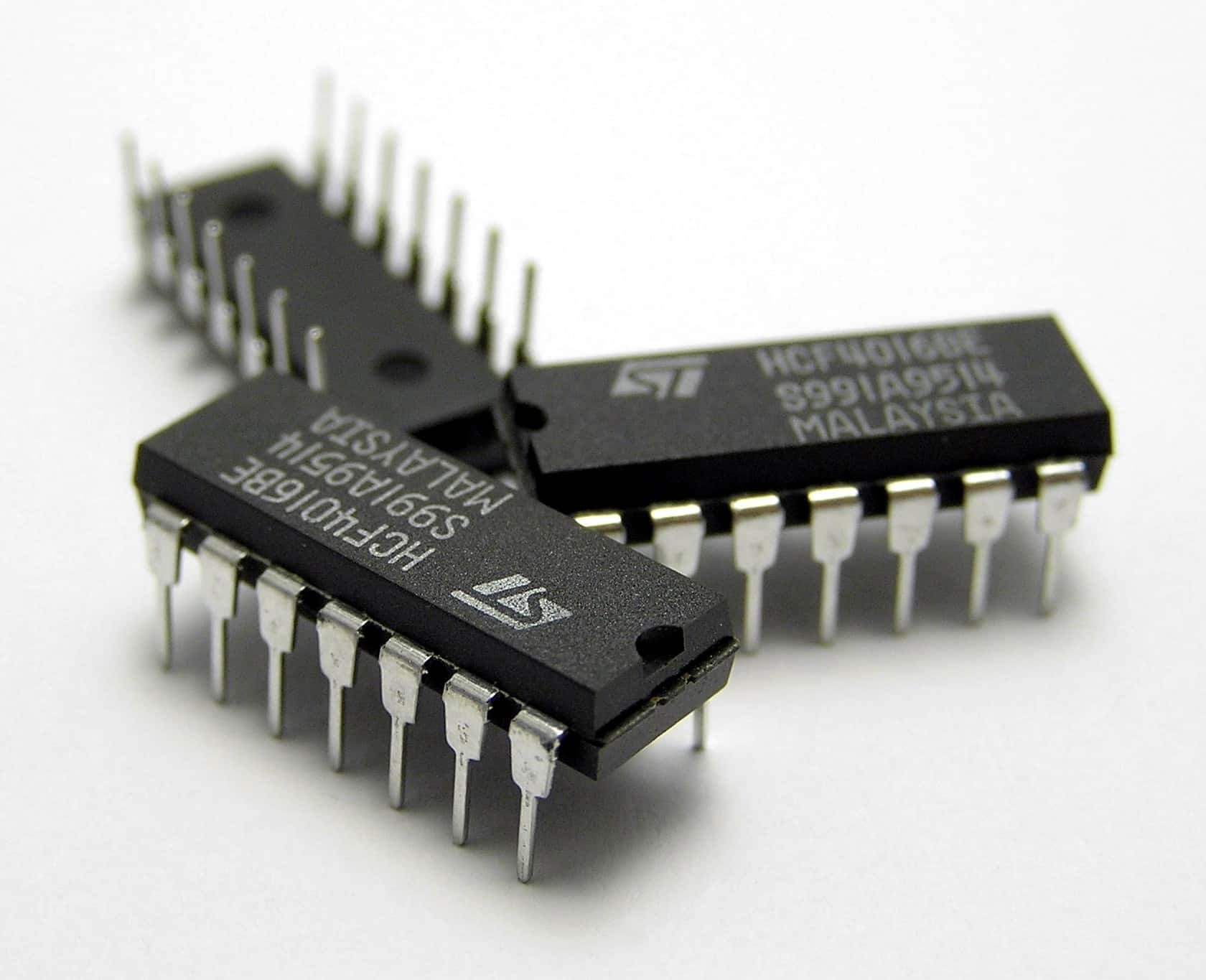
Third generation computers were manufactured using ICs. Earlier ones used SSI technology and later ones used technology. ICs were smaller, less expensive to produce, more rugged and reliable, faster in operation, dissipated less heat, and consumed less power than circuits built by wiring electronic components manually. Hence, third-generation computers were more powerful, more reliable, less expensive, smaller, and cooler to operate than second-generation computers.
Parallel advancements in storage technologies allowed construction of larger magnetic core. Based random access memory as well as larger capacity magnetic disks and tapes. Hence, third-generation computers typically had few megabytes (less than 5 Megabytes). Main memory and magnetic disks capable of storing few tens of megabytes of data per disk drive.
Third Generation of Computer Information
On the software front, standardization of high-level programming languages, timesharing operating systems, unbundling of software from hardware, and creation of an independent software industry happened during the third generation. FORTRAN and COBOL were the most popular high-level programming languages in those days. American National Standards Institute (ANSI) standardized them in 1966 and 1968 respectively, and the standardized versions were called ANSI FORTRAN and ANSI COBOL. The idea was that as long as a programmer follows these standards in program writing, he/she could run his/her program on any computer with an ANSI FORTRAN or ANSI COBOL compiler. Some more high-level programming languages were introduced during the third-generation period. Notable among these were PL/1, PASCAL, and BASIC.
Second-generation computers used a batch operating system. In those systems, users had to prepare their data and programs and then submit them to a computer center for processing. The operator at the computer center collected these user jobs and fed them to a computer in batches at scheduled intervals. The respective users then collected their job's output from the computer center.
The inevitable delay resulting from this batch processing approach was very frustrating to some users, especially programmers, because often they had to wait for days to locate and correct a few program errors. To rectify this situation, John Kemeny and Thomas Kurtz of Dartmouth College introduced the concept of timesharing operating system. Timesharing operating system enables multiple users to directly access and shares a computer's resources simultaneously in a manner that each user feels that no one else is using the computer. This is accomplished by using a large number of independent, relatively low-speed, on-line terminals connected to the computer simultaneously. A separate user uses each terminal to gain direct access to the computer.
Timesharing operating system
Timesharing operating system allocates CPU time in such a way that all user programs have a brief share of CPU time in turn. The processing speed of CPU allows it to switch from one user job to another in rapid succession. Execute a small portion of each job in allocated time slice until the job is completed. Each user gets the illusion that he/she alone is using the computer. Introduction of the timesharing concept helped in drastically improving the productivity of programmers and made on-line systems feasible, resulting in new online applications like airline reservation systems, interactive query systems, etc.
Until 1965, computer manufacturers sold their hardware along with all associated software without separately charging for software. For example, buyers received language translators for all languages supported on a computer they purchased. From the user's standpoint, the software was free. However, the situation changed in 1969 when IBM and other computer manufacturers began to price their hardware and software products separately. This unbundling of software from hardware gave users an opportunity to invest only in the software of their need and value. This led to the creation of many new software houses and the beginning of the independent software industry.
Third Generation Computer image
Another important concept introduced during third-generation was that of a backward compatible family of Computers. During this period, IBM introduced its System 360 as a family of computers with backward compatibility. As they were different sizes of mainframe systems based on the same machine language. Third Generation of Computer Information
Development and introduction of minicomputers also took place during third-generation. Computers built until the early 1960s were mainframe systems that only very large companies could afford to purchase and use. Several innovators recognized this need and formed new firms in the 1960s to produce smaller computers. Digital Equipment Corporation (DEC) introduced the first commercially available minicomputer, the ‘PDP-8 (Programmed Data Processor), in 1965.
It could easily fit in the corner of a room and did not require attention, of a full-time computer operator. It confirmed the tremendous demand for small computers for business and scientific applications, and by 1971. There were more than 25 computer manufacturers in the minicomputer market. Third Generation of Computer Information
Characteristic of third-generation computers are as follows:
- They were more powerful than second-generation computers. They were capable of performing about 1 million instructions per second.
- Their manufacturing did not require manual assembly of individual components into electronic circuits resulting in reduced human labor and cost involved at the assembly stage. Hence, commercial production of these systems was easier and cheaper. However, highly sophisticated technology and expensive setup was required for the manufacture of IC chips.
- They consumed less power and dissipated less heat than second-generation computers. The rooms/areas in which third-generation computers were located still required to be properly air-conditioned.
- They were general-purpose machines suitable for both scientific and commercial applications.
- Standardization of high-level programming languages allowed programs written for one computer to be easily ported to and executed on another computer.
- They were more reliable and less prone to hardware failures than second-generation computers requiring lower maintenance cost.
- Timesharing operating system allowed interactive usage and simultaneous use of these systems, by multiple users.
- They had faster and larger primary and secondary storage as compared to second-generation computers.
- They were smaller than second-generation computers requiring smaller space. Third Generation of Computer Information
Also Read:-
